Named contact
One person per organisation
A named contact from each involved organisation to help shape how OTOS connects with community and therapeutic support work — and to confirm boundaries of visibility.

Jo saw it happen. Once the underlying neurological condition was treated, the work we'd done in therapy finally started to hold. OTOS makes that connection legible — so the next person doesn't have to arrive at it by accident.
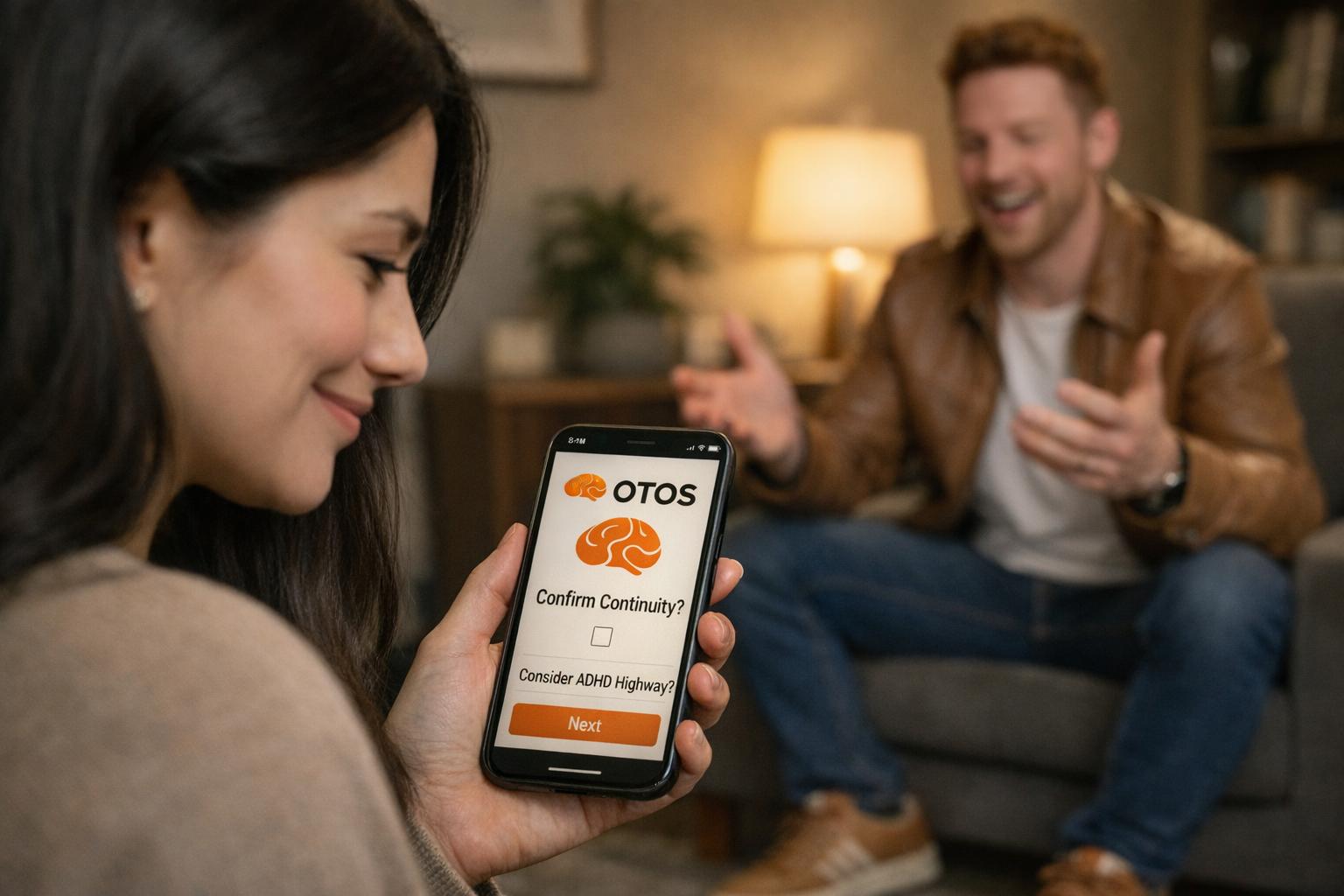
"I've been briefed on OTOS Continuity™ — a non-clinical communications layer connecting therapeutic and community support with clinical services for adults with co-occurring ADHD and addiction. I understand OTOS does not require NHS record access, does not change how therapeutic practice is delivered, and is designed specifically to work in VCSE and community settings. I'd like to explore what a connection between our work and the OTOS pre-pilot might look like."
Edit as you see fit. Two minutes to send. No commitment beyond the note.
Send this note →Jo Fenton saw the change happen in real time. For months, the therapeutic work had been effortful, partial, like trying to build on unstable ground. Then the ADHD was treated. Within weeks, the same therapeutic frameworks began to hold. The groundwork we'd laid was still there — the brain just finally had the conditions to build on it.
That is the connection OTOS is trying to make structurally visible. Therapeutic support works better — sometimes only works — when the underlying neurological condition is addressed. And the people in this cohort can rarely get both in sequence, because no one is holding the thread between them.
OTOS doesn't make therapeutic decisions. It makes it more likely that someone receiving community or therapeutic support also reaches clinical ADHD assessment — and that the two parts of their journey are connected, not siloed.
OTOS is built for organisations like Mind, WorkWell and Jo Fenton — community and therapeutic providers who are a critical part of the pathway but don't have (and shouldn't need) NHS clinical system access.
A named contact from each involved organisation to help shape how OTOS connects with community and therapeutic support work — and to confirm boundaries of visibility.
When someone in the pre-pilot cohort is engaged with Mind, WorkWell or Jo Fenton's services, a lightweight signal that they're engaged and supported — without requiring session content or therapeutic records.
Map the community and therapeutic roles, agree the limits of what OTOS makes visible, and design a participation model that respects therapeutic confidentiality.
One note. One conversation. That is all it takes to start.