Named contact
One person at CGL/CRS
A named contact to answer workflow questions, confirm local boundaries and help shape the continuity protocol for the CGL/CRS intake pathway.

Two people held the thread when I had nothing left. You know better than anyone how often people cycle back without it ever holding. OTOS is the infrastructure that changes that.
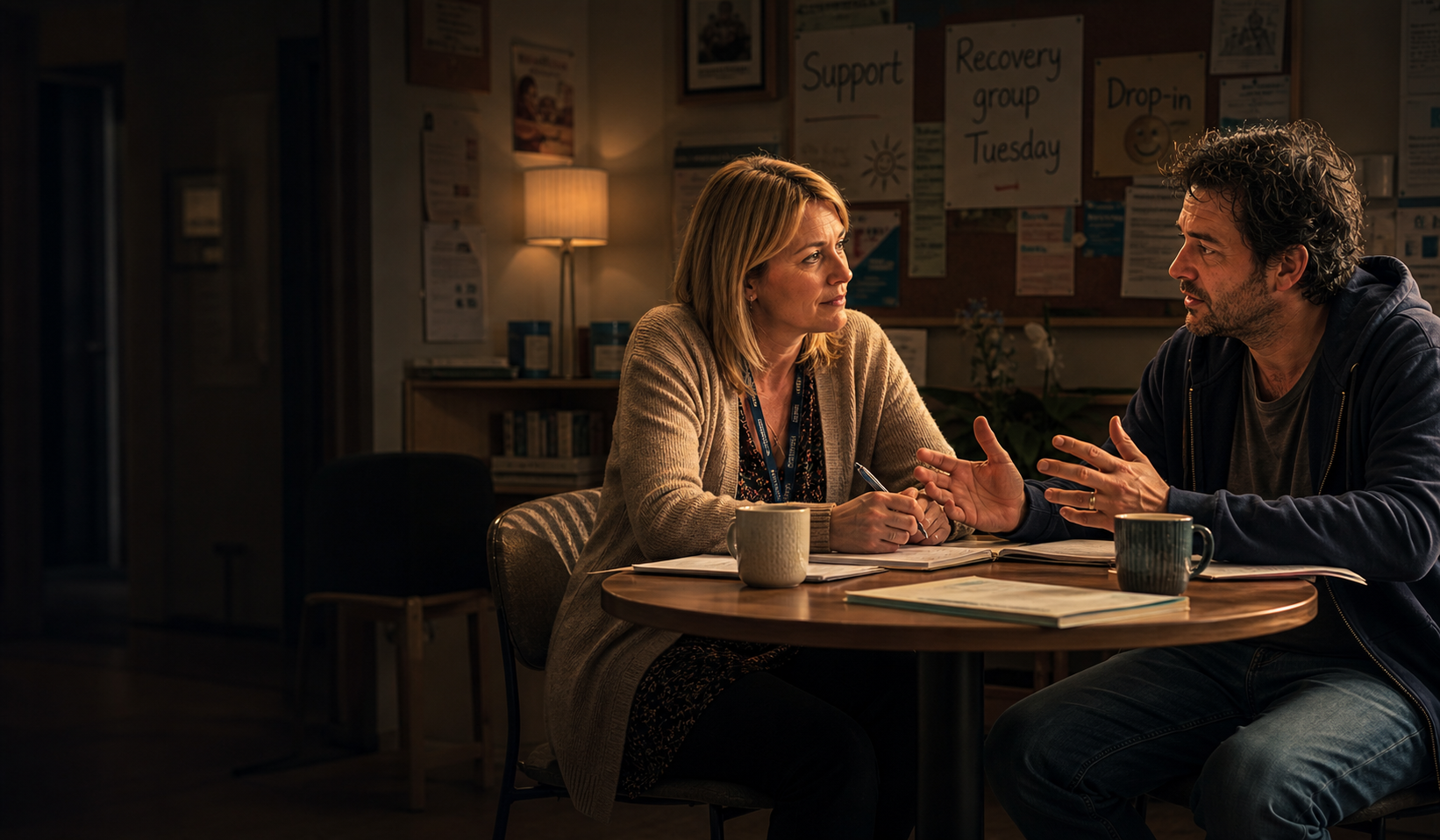
I walked into CGL in an emergency. I didn't have the language, the energy or the clarity to explain myself properly. Annie wrote the referral letter. Rak backed me up. Two keyworkers held the thread when the system was giving me nothing to hold onto.
That kind of holding is exactly what OTOS is trying to make visible and receipted — so the next person has the same experience of continuity without depending on two specific individuals being on shift.
You've seen what happens when the thread doesn't hold. People cycle back. The same crisis. The same intake form. The same question: "have you been with us before?" You already know the answer.
What I'm asking: not for CGL to change how it works. Just to let OTOS wrap around what you already do — so the next-step referral is visible, receipted and trackable across the whole pathway.
OTOS does not add clinical burden. It does not require case management access. Keyworker involvement is the 30-minute scoping call — after that, OTOS runs alongside your existing work.
A named contact to answer workflow questions, confirm local boundaries and help shape the continuity protocol for the CGL/CRS intake pathway.
When someone presenting with ADHD-relevant risk enters CGL/CRS, the thread starts there. Not a clinical decision — just a logged, visible handoff point.
Map the pathway, agree the boundaries, design the safest route in. No commitment required beyond that conversation.
One note. One conversation. That is all it takes to start.
"I've been briefed on OTOS Continuity™ — a non-clinical communications layer connecting services for adults with co-occurring ADHD and addiction. I understand it is not a clinical service, does not require keyworker time beyond an initial scoping call, and does not access any case management system. CGL/CRS plays a central role in the proposed pathway and I'd like to explore our involvement in the 12-week pre-pilot."
Edit as you see fit. Two minutes to send. No commitment beyond the note.
Send this note →